August 2025 – I am very honoured to have been selected for the DFG Heisenberg Programme! My Heisenberg project, BATMAL – Bat Malaria (Haemosporidian) Parasites – Exploring Diverse Host–Parasite Systems, will investigate the evolutionary diversity, infection dynamics, and host–parasite interactions of malaria parasites in bats.
May 2025 – Exciting news! PhD candidate Oskar Werb has been selected to participate in the 2nd Summer Training School of the Wildlife Malaria Network (WiMaNet), taking place from August 18–22 at the Life Science Centre of Vilnius University. We’re thrilled he’ll be part of this inspiring international event! link
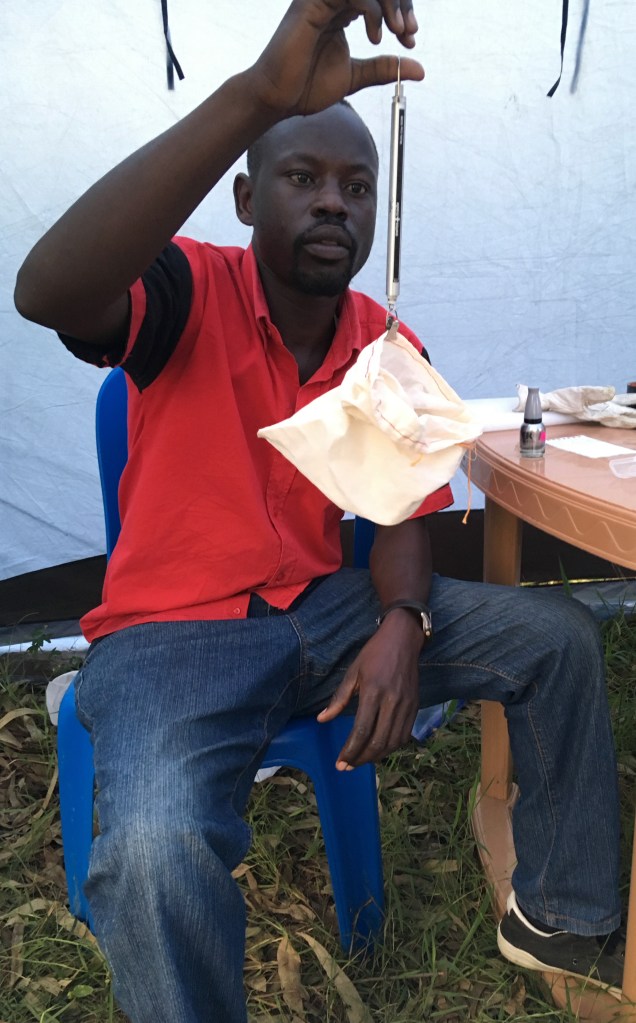
April 2025 – our colleague and collaborator Dennis Anguyo Foe from Muni University, Arua, Uganda will visit our lab at Humboldt University this month. His visit is supported by the Erasmus+ program.
February 2025 – very happy to share our preprint on a systems biology framework for the study on bats and their symbionts: “Bats in Habitats, Bats as Habitats: An integrative ecological framework for understanding synergistic interactions across levels of community organization” https://ecoevorxiv.org/repository/view/8469/
Januar 2025 – our paper “Europe-wide distribution and bat-host specific lineages in the malarial parasite Polychromophilus murinus revealed through genetic screening of bat flies” has been accepted for publication in Infection, Genetics and Evolution! We started working on the project several years ago! Great collaborative work with Luisa Timm and Jaap van Schaik (University of Greifswald) link
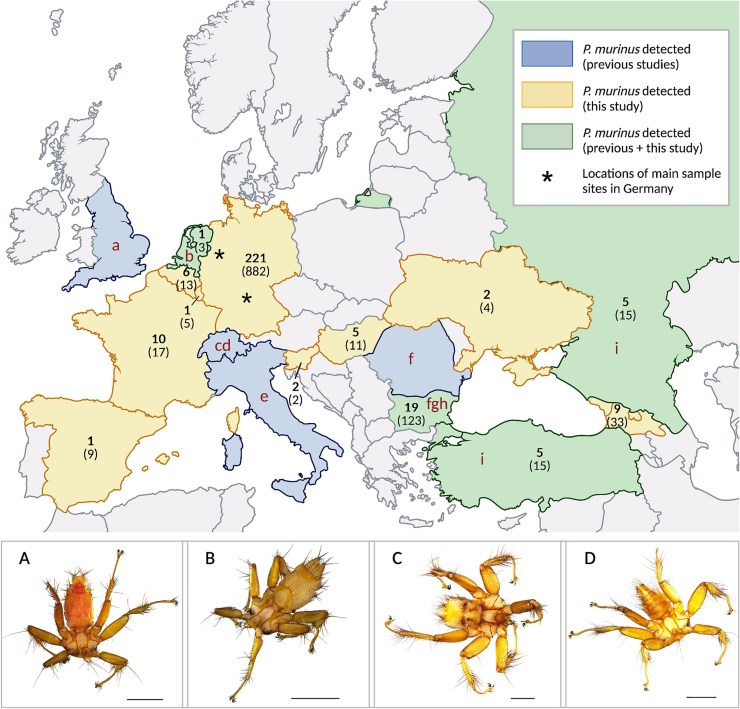
The results suggest an endemic long-term presence of Polychromophilus within European bat populations, and the presence of host-specific associations between P. murinus lineages and its various bat hosts. We posit that exposure to P. murinus appears to be a near certainty in several European bat species.
October 2024 – Elijah Okwuonu (PhD student, University of Nigeria, Nsukka, Enugu State, Nigeria) visited our lab to study blood parasites in Nigerian bats. His research stay was supported by a Flexible Travel Fund from the Berlin Center for Global Engagement (BCGE) at the Berlin University Alliance (BUA).
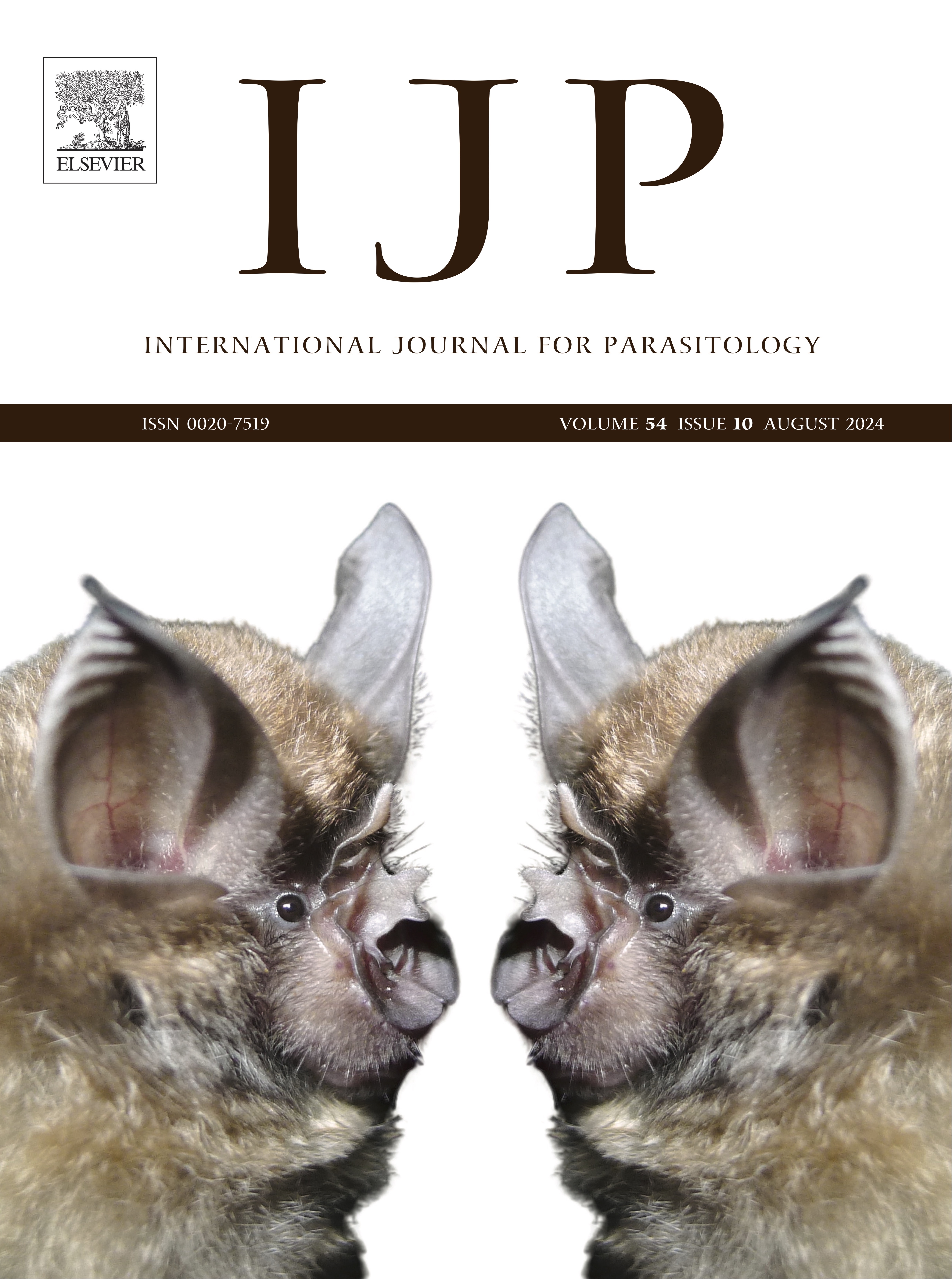
August 2024 – The cover of the August issue of International Journal for Parasitology features our paper “New member of Plasmodium (Vinckeia) and Plasmodium cyclopsi discovered in bats in Sierra Leone – nuclear sequence and complete mitochondrial genome analyses”
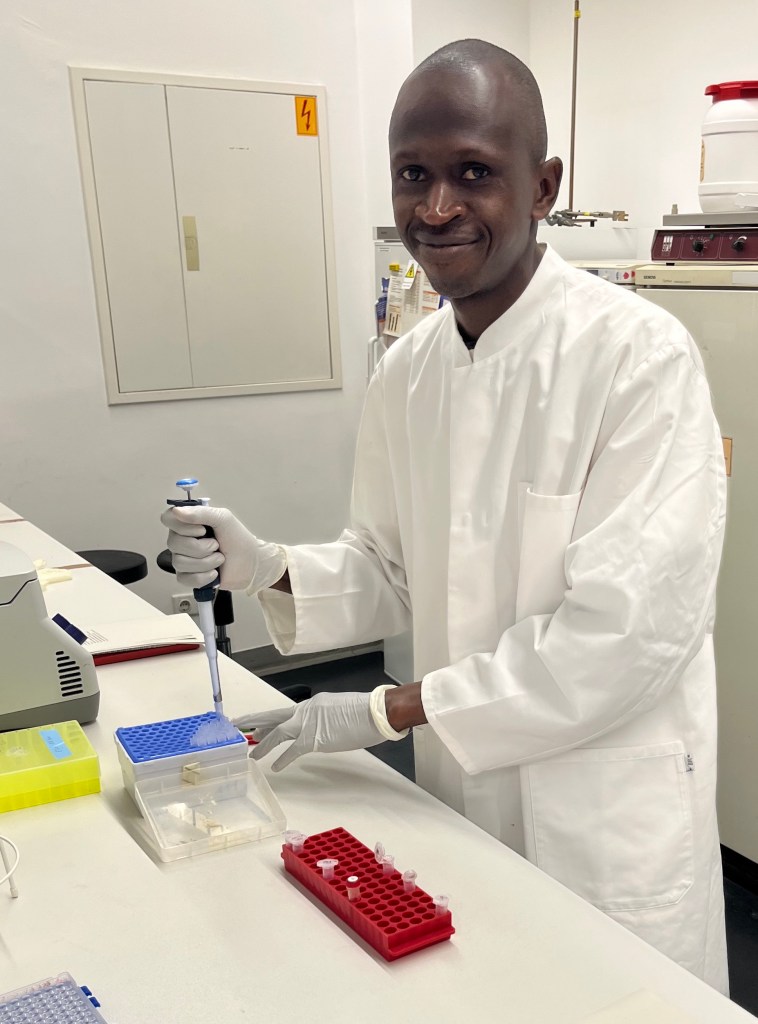
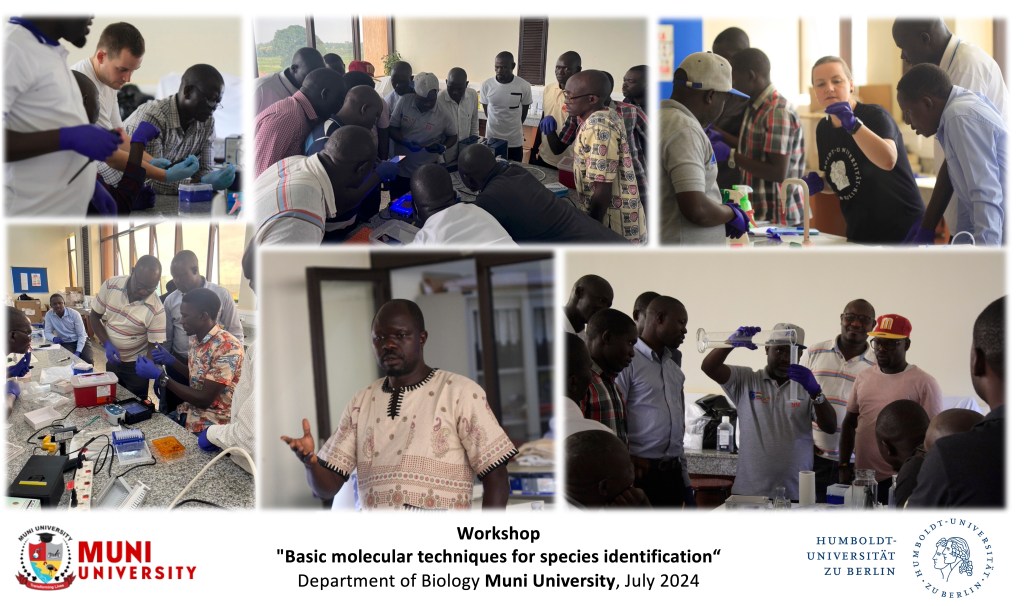
July 2024 – We successfully finished our first workshop “Basic molecular techniques for species identification“ at the Department of Biology Muni University. Thank you to all organizers for your great help (Dr. Imran Ejotre, Muni University/Humboldt University; Oskar Werb, Humboldt University; Dennis Anguyo Foe, Muni University; Kassim Adiga, Muni University). Thank you to all participants for joining the course and for your highly motivated participation.
16th May 2024 – Happy to see our new bat Plasmodium paper published online today: New member of Plasmodium (Vinckeia) and Plasmodium cyclopsi discovered in bats in Sierra Leone – nuclear sequence and complete mitochondrial genome analyses in International Journal for Parasitology: https://www.sciencedirect.com/science/article/pii/S0020751924001085#f0025
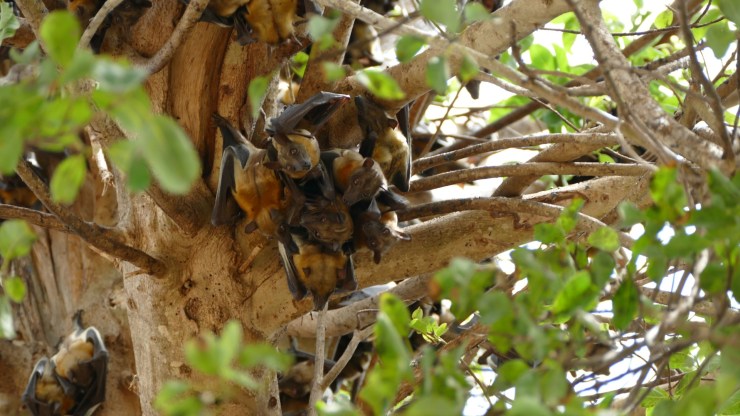
November 2023 – Robust evidence for bats as reservoir hosts is lacking in most African virus studies: a review and call to optimize sampling and conserve bats published in Biology Letters & featured in Max Planck Society and Bucknell University and Université de Montpellier
October 2023 – Our study “First investigation of blood parasites of bats in Burkina Faso detects Hepatocystis parasites and infections with diverse Trypanosoma spp.” led by Noel Thiombiano (Joseph KI-ZERBO University, BURKINA FASO) was published in Parasitology Research
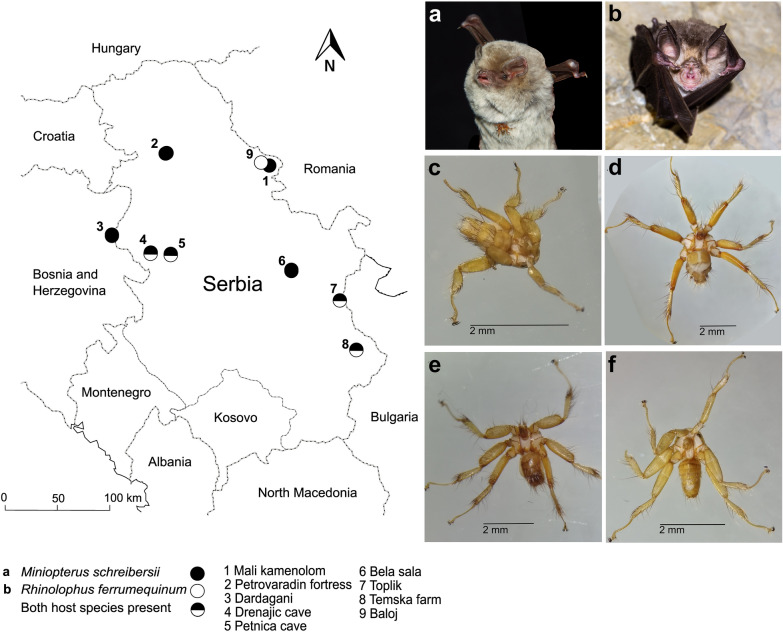
May 2023: Polychromophilus infections in Serbian bats/bat flies! Bajić B, Werb O, Budinski I, Blagojević J, Schaer J, van Schaik J. Non-invasive investigation of Polychromophilus parasite infections in bat populations in Serbia using bat flies. Parasit Vectors. 2023 May 26;16(1):170. doi: 10.1186/s13071-023-05786-1. PMID: 37237268; PMCID: PMC10214537
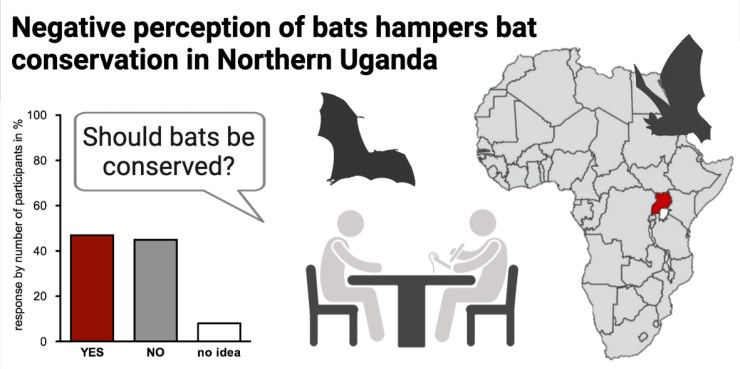
DEC 2022 – Our study “Negative Perception of Bats, Exacerbated by the SARS-CoV-2 Pandemic, May Hinder Bat Conservation in Northern Uganda“, let by Imran Ejotre, was published in the Special Issue Human-Bat Interactions and Sustainable Conservation in Sustainability.
September 2021 – Our paper about Hepatocystis and Nycteria parasites in Central Cameroon is online! Tsague J, EM Bakwo-Fils, JP Atanga, NV Dongue, DW Mbeng, J Schaer, T. Tchuinkam. Hepatocystis and Nycteria (Haemosporida) parasite infections of bats in the Central Region of Cameroon. Parasitology. 2021. https://doi.org/10.1017/S0031182021001542
August 2020: Our mini-review about Hepatocystis parasites is online! Ejotre I, DM Reeder, K Matuschewski, J Schaer. Hepatocystis. Trends in Parasitology. 2020. https://doi.org/10.1016/j.pt.2020.07.015
March 2020: Science Blog “Lab Down Under” released a blog about our work on Hepatocystis parasites in Australia: link to article
July 2019: Our paper about Hepatocystis parasites in Australian Grey-headed flying foxes is accepted for publication and is online! Schaer J, W Boardman, A McKeown, DA Westcott, K Matuschewski, M Power. Molecular investigation of Hepatocystis parasites in the Australian flying fox Pteropus poliocephalus across its distribution range. Infection, Genetics and Evolution. 2019. 75, 103978. https://doi.org/10.1016/j.meegid.2019.103978
November 2018: Our paper about Nycteria and Polychromophilus parasites of bats in Gabon got accepted and is online! https://doi.org/10.1016/j.meegid.2018.11.022
June 2018: Our paper about the phylogeny of Hepatocystis parasites of Australian Pteropus species got accepted today and is online! https://doi.org/10.1016/j.ijppaw.2018.06.001
May 2018: AMNH press release: Researchers Build Most Comprehensive Tree of Life for Malaria Parasites. Our paper about the polyphyly of Plasmodium is online in Royal Society Open Science! (23.05.2018). The polyphyly of Plasmodium: comprehensive phylogenetic analyses of the malaria parasites (order Haemosporida) reveal widespread taxonomic conflict. http://rsos.royalsocietypublishing.org/content/5/5/171780
F1000 recommendation: link
The INDEPENDENT: Bat ‘immunity’ over malaria parasites could be key to human vaccines, link
This Week in PNAS: High diversity of malaria parasites reveals bats’ exceptional immunology
Max Planck Society: West African bats – no safe haven for malaria parasites, 2013, link
ScienceDaily/AMNH: Scientists Find Soaring Variety of Malaria Parasites in Bats, 2013, link
 Juliane Schaer